You Can't Bash a Generative Culture into Existence: You Need to Grow it
Because Pathological cultures thrive on power and Bureaucratic cultures thrive on rules, a leader who is seeking to transform these cultures into a more generative environment (open flow of information, high trust, mission-focused) can expect to meet resistance. Some of the existing leaders, people who have been successful operators in the Pathological and Bureaucratic cultures, may try to ignore the new behaviors and values, or even attack the transformational generative leader.
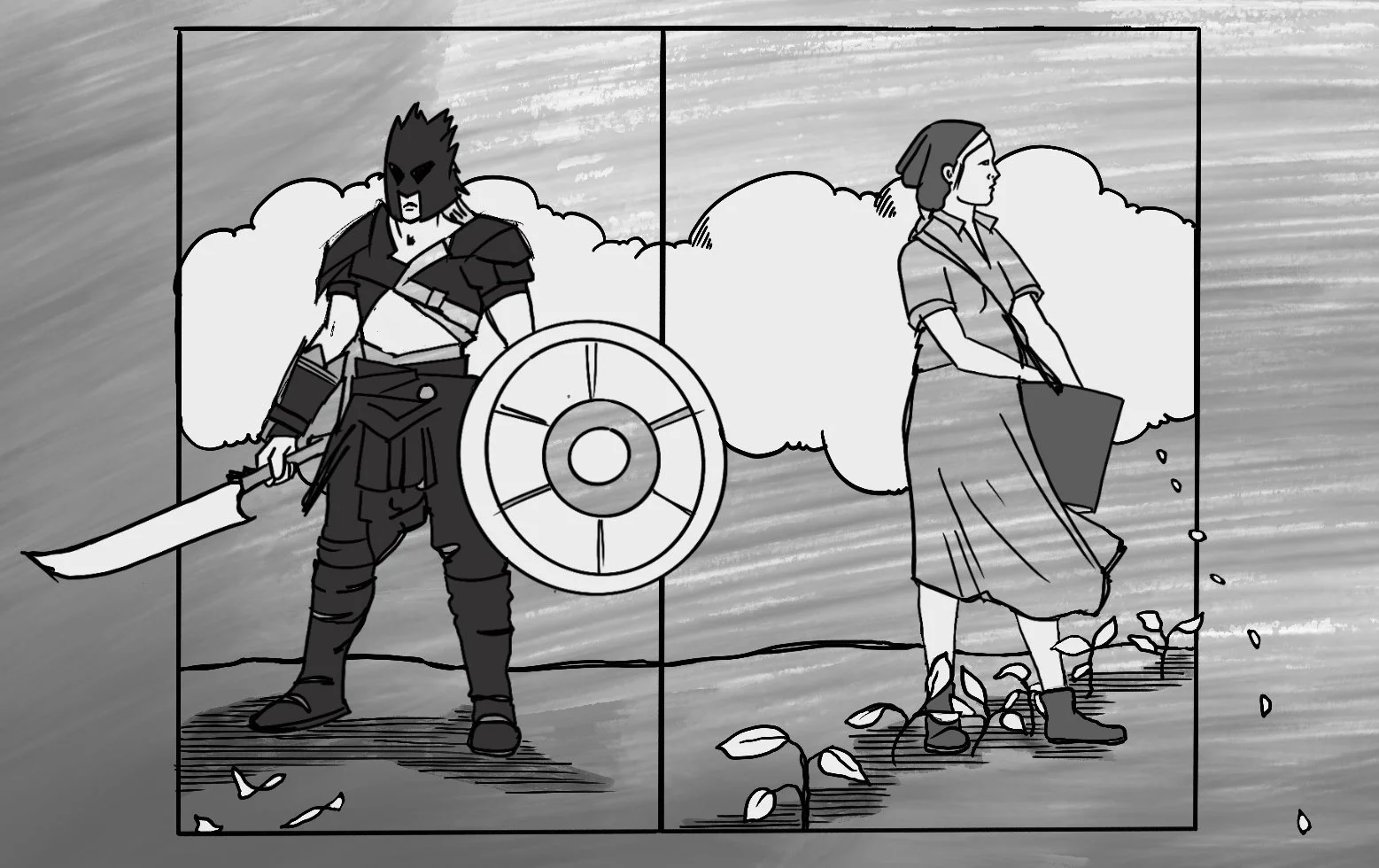
In Pathological (power-oriented) and Bureaucratic (rule-oriented) cultures, information is a weapon and rules are a shield. A transformational, generative leader seeking to change the culture may be tempted to compete with the status quo, adopting highly assertive and highly uncooperative behaviors to win the battle to force alignment around the generative culture and enable different behaviors to flourish. Some may see the need to win the culture conflict as their most important battle, and in order to build a safe-enough space, where everyone can become highly collaborative, know they first need to change the behaviour of the existing leadership. So how can they handle opposition? Do they take out the saboteurs, acting as the hero, clutching their trusty sword and shield and setting off on a journey of dominance, with lots of hitting, bashing, and killing?
If they do, then while they may win some small battles in changing behavior, at some point, they will need to lay down their sword to avoid creating a new version of the same old pathological leadership. A generative culture is characterised by information flow and transparency, psychological safety, trust and faith in colleagues, learning and continuous improvement, accountability and ownership, shared responsibility, and by decision making at the lowest possible level. The leader who grows such a culture is an enabler, someone who uses their power to protect teams, not to dominate them. When does the warrior lay down their sword and begin to behave differently?
An alternative lens is for the transformational generative leader to see themselves as a more humble character, perhaps a gardener or even simply a sherpa holding a new bag, one containing the seeds of the generative culture (all credit to Ursula K. Le Guin, who suggested the first tool of civilization was not the weapon but the basket). This leader is someone who is happy to play the role of being a vessel for holding things together, someone who inspires gathering, who is focused on ‘growth and becoming’, and on the mission. This leader is aware that they are a small part of a longer unfolding story, rather than the lead in a short story that ends with lots of deaths and a victory.
To move an organization from a Pathological/Bureaucratic culture to a Generative one requires leaders to shift from being the ‘hero’ who slays the opposition to being the ‘collector’ who gathers the community, facilitating a new shared vision and purpose. A ‘gardner’ who helps design and grow the new environment, not an architect or carpenter who crafts it. Instead of ‘fighting’ those who do not support change, these leaders create new constraints and build safe boundaries, creating ‘bounded spaces’ for those who want to embrace and grow the new culture. They do not seek to ‘defeat’ the old guard, they simply begin to remake the existing environment and in doing so, make their old behaviors irrelevant. They do this by creating the conditions to grow the new environment, gathering the resources, information, and people into this newer collaborative environment where a new shared vision emerges, and in which different rules apply.
On these ‘generative transformation’ journeys, the leader’s toughest moments are not acts of aggression, but acts of containment. They manage boundaries, help establish new norms, and make new connections by bridging silos. They unblock information flow and carefully encourage people to dismantle bureaucracy, prune rules that choke growth, and engage in feedback and continuous learning. They do this by creating alignment through shared purpose and meaning, and by building collaboration, establishing boundaries with fences that hold the toxicity of the old culture at bay, and creating hothouses where small ‘pots’ of experimentation can be nurtured. If a seed doesn't sprout, they help people learn from the experiment and avoid blaming those who fail simply because they are safely trying new things.
These leaders succeed by constraining those who seek to obstruct the new. First with fences so their behavior cannot damage the ‘useful seeds’ of the new culture, then ultimately by removing them from the emerging garden. They do this because they know they are the ultimate ‘sieve’ of those who cannot or will not be ‘held’ by these new requirements, allowing other leaders to effectively sift themselves out. This is tough work (restructuring, removing blockers) and it is hard gardening, or if you like ‘organizational housekeeping’. These leaders aren't ‘killing the enemy,’ they are clearing something rotten out of the bag (toxic behaviours), or pruning a dead branch from which nothing generative will grow.
As Urusla K. Le Guin argues, the heroic spear stories have to have an ending (a victory or a defeat), but the container/bag stories are, “full of beginnings without ends... a space that contains a world." The generative leader shifts from ‘crushing the resistance’ to ‘gathering a community,’ making it clear there is no room in this bag for those who poison the grain. Instead of a ‘war’ on Bureaucracy, they ‘harvest’ new ideas and better ways of relating. Instead of success being the cry ‘I drove the transformation to a glorious victory,’ they more modestly claim ‘we seem to have created an environment where we can flourish and grow’. Their transformation isn’t a ‘great battle,’ it is a long series of cycles of ‘seeding and harvesting.’